Get A FREE PT Marketing Course: "How to Get Your First PT Client Worth S$545 When You Join Today

Your First Personal Training Session: A Practical Checklist for Newly Certified Trainers
Published on 21 November 2026
You’ve passed your exam, a client has said yes, and the session is on your calendar. Now what? Your first session sets the tone for everything after it, so it helps to walk in with a plan rather than make it up as you go.
In this guide, we’ll take you through what to prepare before, during and after your first personal training session in Singapore. Use it as a checklist, then adapt it to your own coaching style.
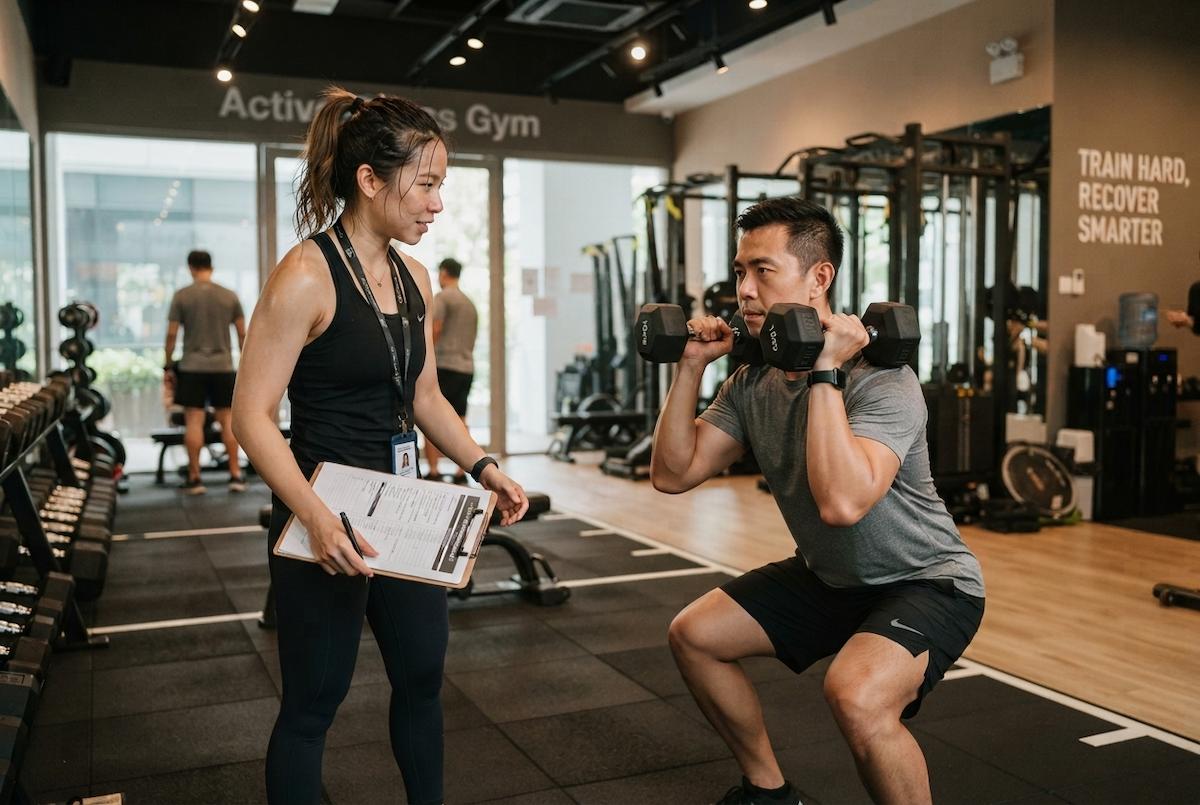
Before the Session: Confirm the Basics
Most first-session problems start before anyone lifts a weight. A wrong venue, a missing guest pass or an unclear price can throw off the whole hour.
A day or two before, send your client a short message that confirms:
Date, time and duration, including when you’ll arrive.
Venue and access. For a condo gym, check whether the resident must book the slot or sign you in. For a commercial or public gym, check the venue’s rules on outside trainers.
What to bring: water, a towel, training shoes and any medication they may need, such as an inhaler.
Price and payment, if you haven’t settled it yet. If you’re still deciding, read our guide on how to price your first personal training package.
For outdoor sessions, plan around Singapore’s heat and rain. Pick a shaded spot, schedule away from midday where you can, and have a sheltered backup location ready.
Screen Your Client Before You Train Them
Ask your client to complete a health screening questionnaire, such as the PAR-Q+, before the session. This is where the health evaluation and fitness assessment topics from your CPT course come into practice. It tells you whether they have a medical condition, injury or medication that affects how you should train them.
If the answers raise a concern, ask the client to get clearance from their doctor before you start exercise. A short delay is better than a preventable incident.
Alongside the questionnaire, collect:
| Item to collect | Why it matters |
|---|---|
| Emergency contact | So you know who to call if something goes wrong |
| Past and current injuries | Shapes exercise choice and range of motion |
| Training history | Tells you where to start the session |
| Goals in their own words | Gives you something to measure progress against |
| Schedule and preferred days | Helps you plan the next sessions |
Also check what your venue requires from trainers. Many gyms ask for a current CPR/AED certificate and insurance cover, so confirm this before your first client, not after.
Plan the Session, Then Plan Your Backup
Write a simple session plan, even if you know it well. A plan keeps you calm when you’re nervous, and it shows the client you’ve prepared for them specifically.
Here’s a sample structure for a 60-minute first session:
| Time | What happens |
|---|---|
| 0–5 min | Welcome, check how they’re feeling today |
| 5–15 min | Review their screening answers and goals together |
| 15–25 min | Warm-up and a few basic movement checks |
| 25–50 min | Main workout at a comfortable, manageable effort |
| 50–55 min | Cool-down and stretching |
| 55–60 min | Recap and agree on next steps |
For every main exercise, prepare an easier and a harder option. If the gym is busy or the client finds a movement uncomfortable, you can switch without stopping the session.
Our advice: Keep the first workout easier than you think it should be. Your goal is a client who leaves confident and wants to come back, not one who can’t climb stairs for three days.
During the Session: Coach More, Talk Less
New trainers often over-explain. Your client doesn’t need a lecture on muscle anatomy in session one. They need clear cues, a safe workout and the feeling that you’re paying attention to them.
A few habits that help:
Demonstrate, then watch. Show the movement once, then let the client try it while you observe.
Use one or two cues at a time. “Chest up” is easier to act on than five corrections at once.
Check in often. Ask how the effort feels and whether anything is uncomfortable.
Watch for warning signs. Dizziness, unusual shortness of breath or chest discomfort mean you stop the exercise.
Keep your phone away, unless you’re using it for a timer or notes.
End with a Clear Next Step
The last five minutes matter as much as the first five. Before your client leaves, recap what they did well and one thing you’ll work on next time.
Then agree on the next session. Many trainers lose clients here because they end with “let me know when you’re free” instead of booking the next date on the spot.
If the first session was a trial, this is also the moment to explain your package, its price and what happens next. Keep it simple and let the client decide without pressure.
After the Session: Write It Down Within 24 Hours
Write your session notes while the details are fresh. Record the exercises, loads and reps, how the client responded, and anything to change next time.
Then send a short follow-up message. Thank them, remind them to hydrate and rest, mention that mild muscle soreness is normal, and confirm the next session time. Ask them to tell you if anything feels unusual.
Over your first few clients, these notes become your best learning tool. Patterns appear quickly, such as which exercises confuse beginners or where your sessions run over time.
Your First-Session Checklist
Before: confirm time, venue, access rules and price; collect the screening form and emergency contact; check your venue’s requirements for trainers.
Plan: write the session plan; prepare easier and harder options; plan a wet-weather backup for outdoor sessions.
During: check in on how they feel; demonstrate, then observe; keep the effort manageable; stop if warning signs appear.
End: recap the session; book the next date; explain your package if it was a trial.
After: write notes within 24 hours; send a follow-up message; review what to change.
FAQ
How long should a first personal training session be?
Most trainers run 45 to 60 minutes. Allow extra time for screening and goal-setting, as the first session usually has more conversation than later ones.
Should my first session with a client be free?
It's your choice. Some trainers offer a free or discounted trial, while others charge from the first session. Our guide on how to price your first personal training package covers the trade-offs.
Do I need to do a full fitness assessment in the first session?
Not necessarily. A few simple movement checks are often enough to start. You can add more detailed assessments over the next sessions once the client is comfortable with you.
What if my client tells me about a medical condition?
Don't guess. Ask them to get clearance from their doctor before starting, and follow any advice they're given. Stay within your scope as a personal trainer.
Plan Your Personal Training Career with NCSF Singapore
Your first session won’t be perfect, and it doesn’t need to be. What matters is that you prepare, keep your client safe and learn from each session.
If you’re planning the bigger picture, our 90-day career roadmap for new personal trainers covers what to do after certification, and our guide to getting your first personal training clients helps you fill your schedule.
Not certified yet? Explore our NCSF Certified Personal Trainer course in Singapore and speak with our team about the next intake.
This checklist is general guidance for newly certified trainers. Always follow your venue’s policies, and refer clients to a medical professional when their health needs it.



Earnings and income results are not guaranteed. Actual outcomes depend on individual effort, skill, and market conditions.
Copyright 2012 - 2026. NCSF Certified Personal Trainer Courses - Singapore. All Rights Reserved.
189 Upper Paya Lebar Road, Singapore 534870